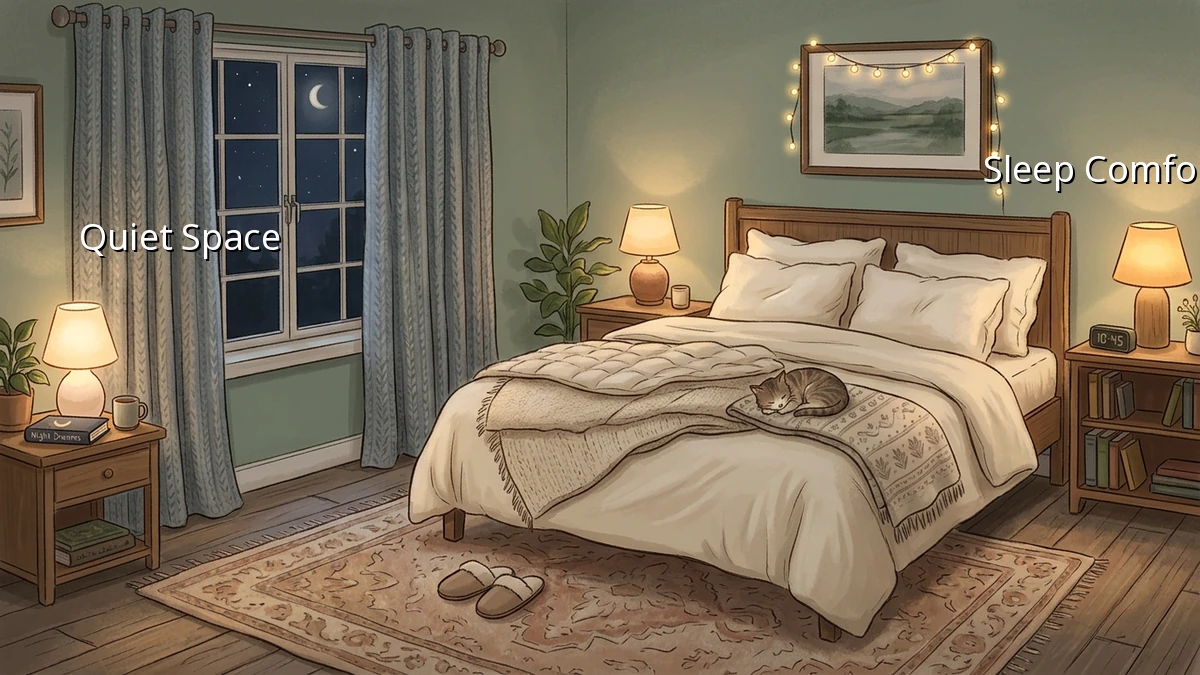
Quiet Bedroom Setup for Beginners
Quiet Bedroom Setup for Beginners
The low hum of traffic outside and the sudden creak of the hallway floorboards always seem to get louder the moment my head hits the pillow after a long, exhausting day. When we are mentally fatigued, even the tiniest sounds can keep our minds racing, making peaceful sleep feel miles away. If you have ever stared at the ceiling wishing for a volume button for the world, you are definitely not alone.
Creating a quiet bedroom does not require expensive remodeling or professional soundproofing. As someone who balances a busy work schedule and family life, I have learned that simple, budget-friendly adjustments to your sleep space can make a world of difference. Let us look at some practical sleep hygiene basics to help you build a calm bedroom, one small step at a time.
Why a Quiet Environment is Essential for Sleep Hygiene
We often think of sleep hygiene as just avoiding screens before bed or cutting back on caffeine. However, our physical sleep space plays a massive role in how deeply we rest. Even if a sound does not fully wake us up, bedroom acoustics can disrupt our sleep cycles, leaving us feeling tired the next morning.
A quiet bedroom acts as a signal to your brain that it is safe to let go of the day's stress. By focusing on noise reduction, we can protect our sleep quality and enjoy more restorative rest.
Easy Sound Dampening Hacks for Beginners
You do not need to tear down your walls to block out unwanted noise. Instead, we can use soft textures to absorb sound waves and create a natural noise block.

Here are a few simple ways to start sound dampening your room today:
- Add a Thick Bedroom Rug: Hardwood or tile floors tend to bounce sound around the room. Placing a plush bedroom rug under or beside your bed is an easy way to absorb vibrations and soften footsteps.
- Hang Heavy Drapes: Standard blinds do very little to stop outdoor sounds. Swapping them for heavy drapes or blackout curtains can significantly reduce the street noise entering through your windows.
- Rearrange Your Furniture: If you share a wall with a noisy hallway or a neighbor, try placing a large bookshelf or a heavy wardrobe against that wall. It acts as a natural barrier to dampen sound.
Masking the Noise: White Noise and Earplugs
Sometimes, we cannot block every single sound from the outside world. That is where sound masking comes in handy to maintain night quiet.
If you find yourself easily startled by sudden noises, a sound machine can be a lifesaver. By producing a consistent stream of white noise or gentle nature sounds, it blends background noises together, making sudden spikes in volume much less noticeable.
For those nights when you need absolute silence, a comfortable pair of earplugs is a simple, low-cost tool. Look for soft foam or silicone options designed for sleep comfort so they do not irritate your ears during the night.
Taking It One Step at a Time
Setting up a quiet bedroom is not about achieving absolute silence; it is about creating a space where your mind can finally rest. You do not have to buy everything at once. Start by adding a cozy rug or trying a free white noise app on your phone tonight.
Remember, sleep hygiene is a journey, not a test. Be gentle with yourself, celebrate the small improvements, and sleep well.