Quiet Bedroom for Stressed Adults
You finally crawl under the covers after a long, chaotic day, ready to drift off, but suddenly every tiny sound outside feels like it is amplified by a microphone. The distant hum of traffic, a neighbor's dog barking, or even the subtle creaking of the house can keep your mind spinning when all you want is some peace.
When we are mentally exhausted, our brains become highly sensitive to these nighttime disruptions. Creating a quiet environment is not about turning your home into a professional recording studio; it is about finding simple, realistic ways to buffer the noise so your mind can finally feel safe enough to let go. Let us look at some practical sleep hygiene habits that can help you reclaim your night silence without adding more stress to your to-do list.
The Hidden Impact of Noise on Sleep Quality
We often think we are asleep just because our eyes are closed, but our ears are always listening. Even if a sound does not fully wake you up, it can shift you from a deep, restorative sleep stage into a lighter one. This leaves you feeling tired and foggy the next morning, even if you thought you slept through the night.
Improving your bedroom acoustics is a gentle form of self-care. By creating a reliable noise block, you signal to your nervous system that it is safe to relax. It is not about achieving absolute, sterile silence, but rather about establishing a consistent rest environment where your mind can rest easy.
Simple Ways to Soften Your Bedroom Acoustics
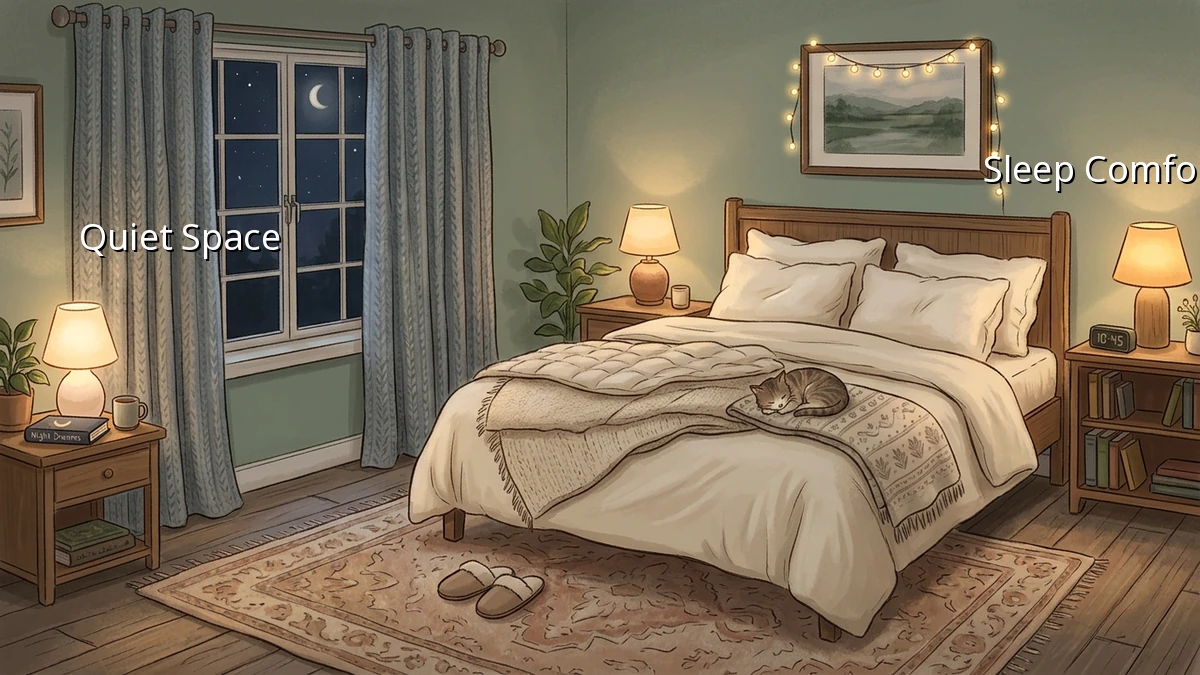
You do not need an expensive renovation to improve your sleep comfort. Often, the most effective solutions involve simply adding soft textures to your sleep space to absorb sound waves.
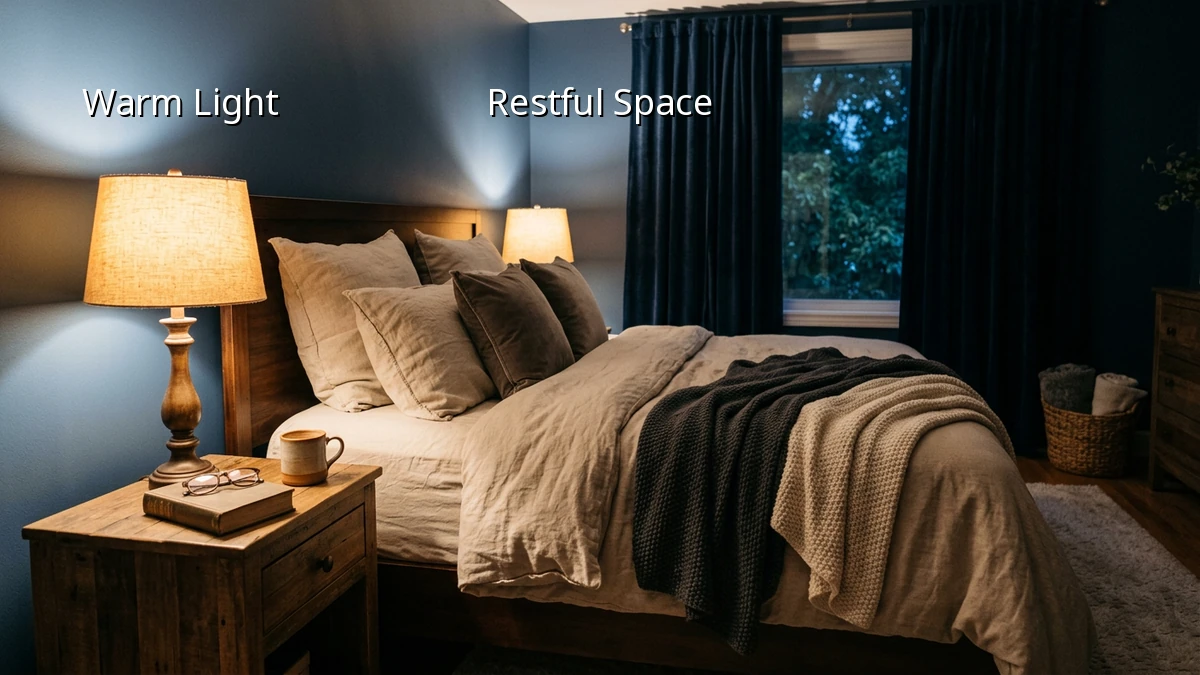
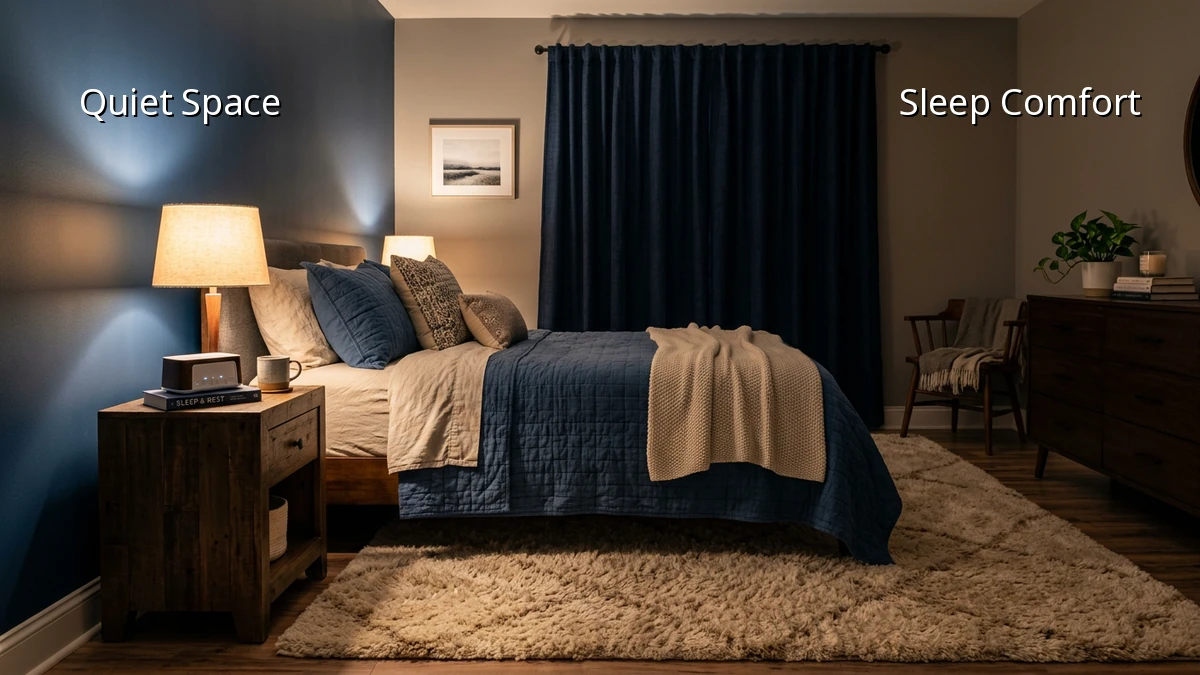
- Hang Heavy Drapes: Standard blinds do very little to stop outside noise. Replacing them with thick, heavy drapes or dedicated blackout curtains can make a noticeable difference. They act as a soft barrier, dampening the sounds from the street while also keeping out unwanted light.
- Lay Down a Bedroom Rug: If you have hardwood or laminate floors, sound tends to bounce around the room, creating an echo effect. Placing a thick, plush bedroom rug under or beside your bed helps absorb these vibrations, making the entire space feel much quieter and cozier.
- Seal the Gaps: A lot of noise enters through the small cracks around your bedroom door or windows. Using a simple draft stopper at the bottom of your door can block both unwanted drafts and hallway noises.
Embracing Soothing Sounds and Gentle Blocks
Sometimes, blocking every single sound from the outside world is impossible. In those cases, the best approach is to manage how we perceive those sounds.
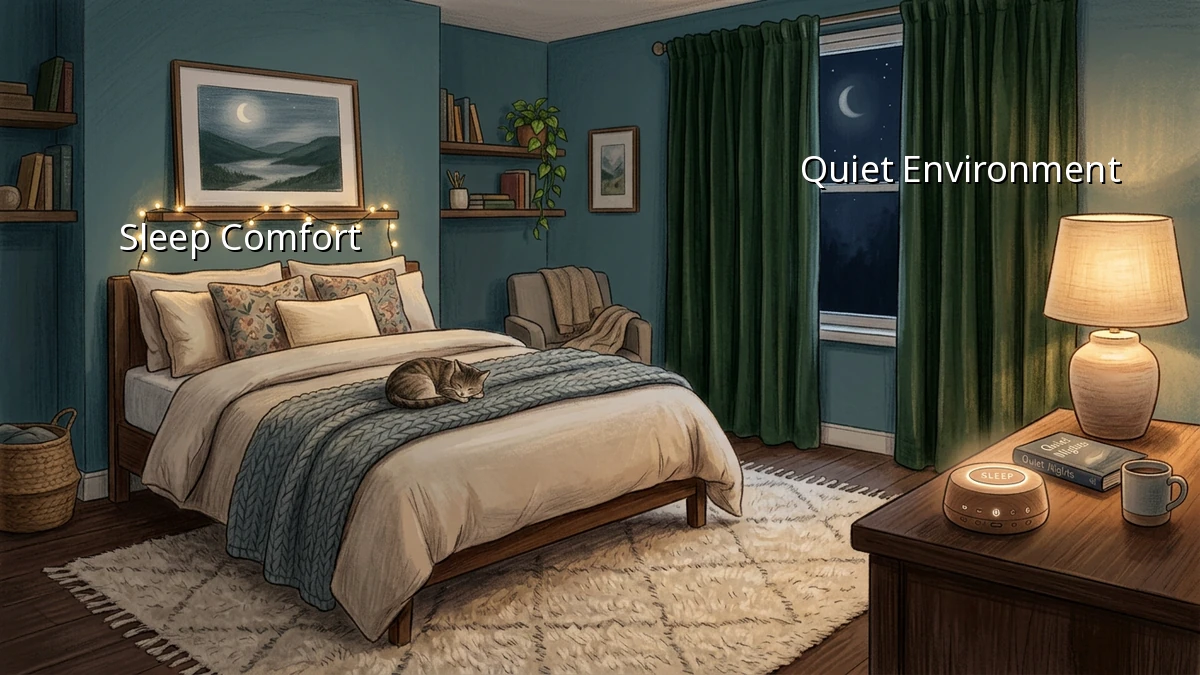
- Introduce White Noise: It might sound counterintuitive to add sound to a quiet space, but white noise works by creating a steady, consistent background hum. This masks sudden, jarring noises like a car door slamming or a dog barking. You can use a dedicated sound machine or even a simple fan to create this soothing effect.
- Experiment with Soothing Sounds: If static white noise feels too harsh, many people find comfort in pink noise, which has deeper, gentler tones like falling rain or wind rustling through trees.
- Keep Earplugs Handy: For those nights when the world outside is exceptionally loud, a soft pair of silicone or foam earplugs can be a lifesaver. Keep them on your nightstand so you do not have to search for them in the dark when you are already tired.
Small Steps to a Calm Bedroom
Creating a peaceful bedroom is a personal journey, and there is no need to change everything overnight. You might start by simply putting down an old rug you already own, or turning on a fan for some gentle background noise tonight.
Remember, sleep hygiene is not about perfection. It is about making small, sustainable adjustments that fit your life and help you wake up feeling just a little more rested. Be kind to yourself as you find what works for your unique space, and sleep well.