Free Evening Relaxation for Beginners
The hum of the dishwasher is finally quiet, the living room lights are low, and you sink into the couch, only to realize your mind is still running at full speed. It is a familiar feeling for many of us. We want a peaceful sleep, but our brains did not get the memo that the day is done. You do not need expensive gadgets, fancy sleep apps, or pricey supplements to transition from a hectic day to a restful night. Some of the most effective tools for sleep wellness and stress reduction are completely free. Let us explore how simple, budget-friendly evening habits can help you achieve a quiet mind and better sleep quality.
The Power of a Mental Wind-Down
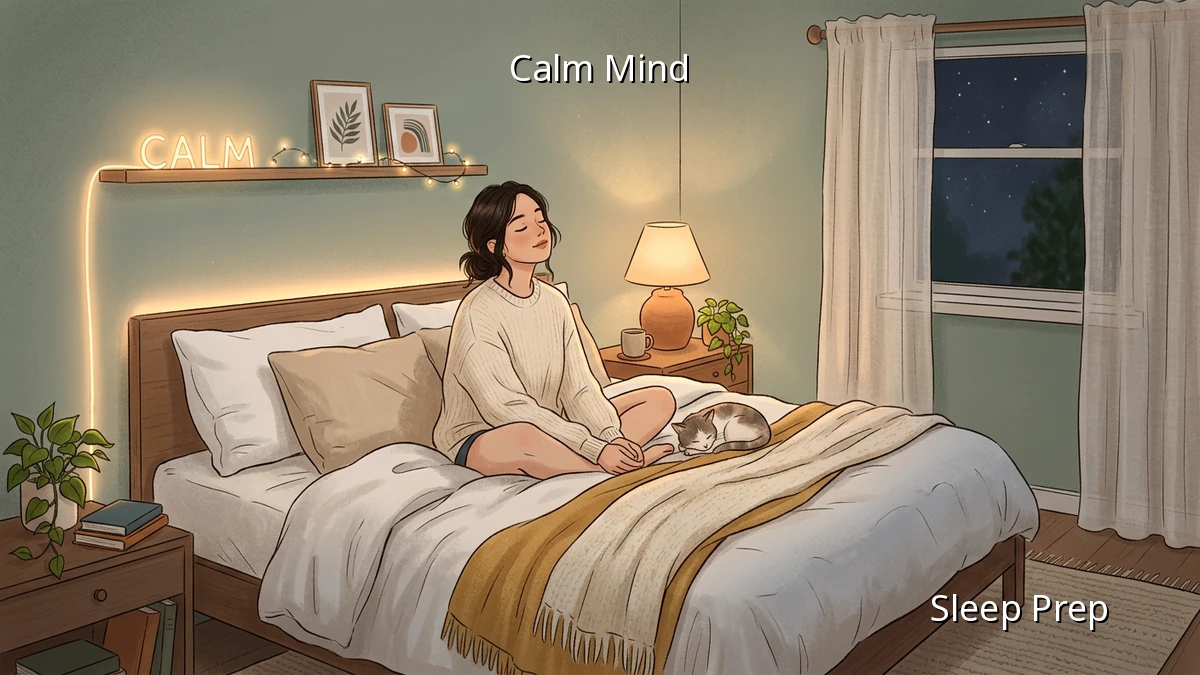
Sleep hygiene is not just about having a comfortable mattress; it is about preparing your brain for rest. When we jump straight from answering emails, managing family tasks, or scrolling through social media into bed, our minds remain in active mode. Taking just ten or fifteen minutes for a deliberate mental wind-down acts as a bridge between the busyness of the day and nighttime calm. By creating a simple evening relaxation routine, you signal to your nervous system that it is safe to let go of the day's tension.
Three Free Relaxation Habits for Beginners
If you are new to sleep prep, keep it simple. You do not need to overhaul your entire night. Here are three easy sleep practices you can try tonight without spending a single penny:
1. The Evening Brain Dump
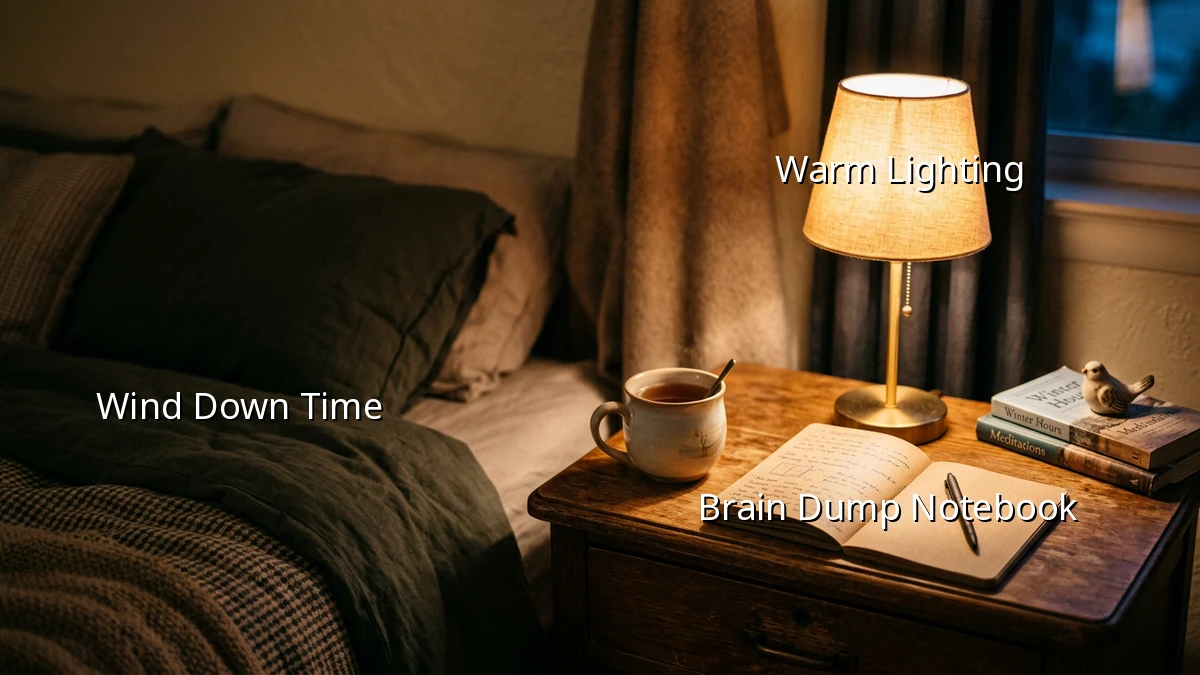
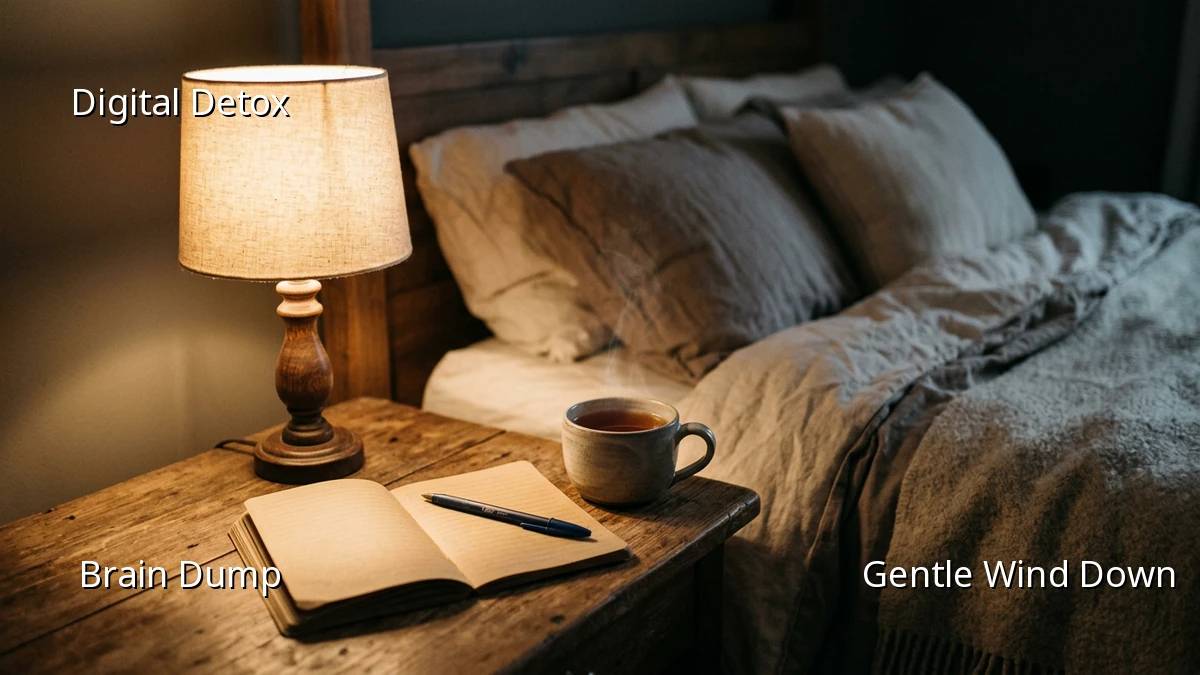
One of the biggest obstacles to a peaceful sleep is the mental to-do list that starts looping the moment your head hits the pillow. Grab any scrap of paper or an old notebook and write down everything spinning in your head. Write down tomorrow's tasks, worries, or random thoughts. Getting them out of your head and onto paper signals to your brain that these items are safely stored and do not need to be processed overnight.
2. The 4-7-8 Breathing Technique
Deep breathing is a powerful, free relaxation tool that directly signals your nervous system to calm down. Try the simple 4-7-8 method: inhale quietly through your nose for 4 seconds, hold your breath for 7 seconds, and exhale completely through your mouth making a soft 'whoosh' sound for 8 seconds. Repeating this cycle just four times can help lower your heart rate and bring a sense of physical and mental calm.
3. Dimming the Lights and Unplugging
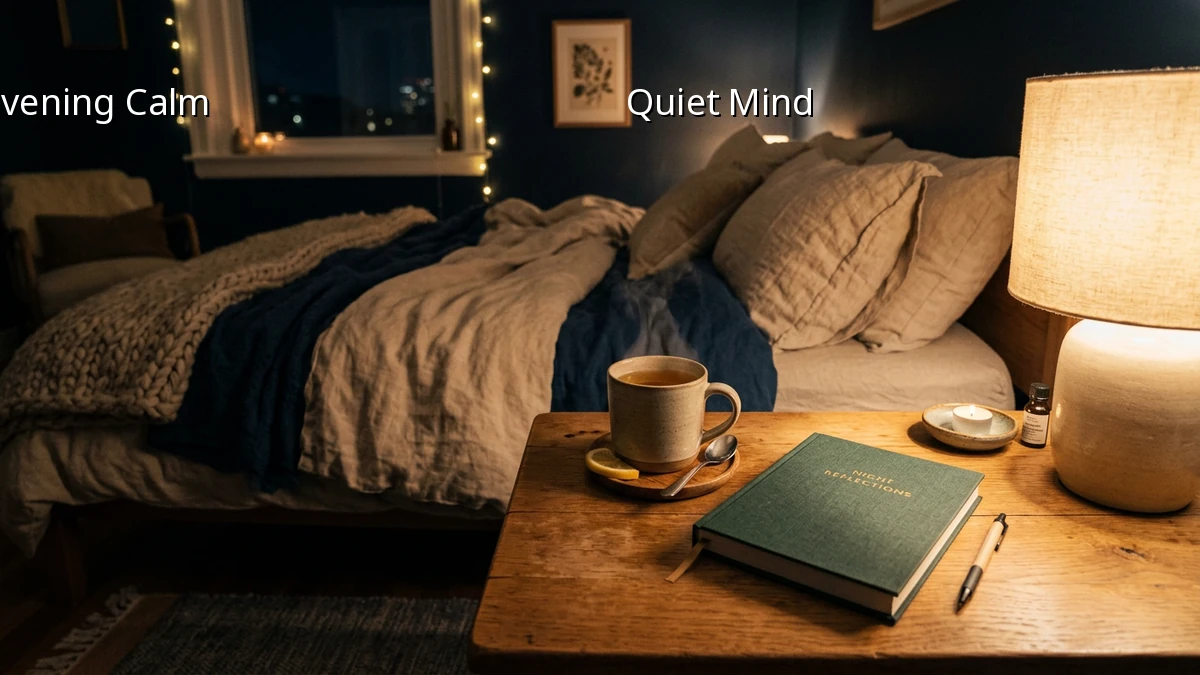
Our bodies rely on light cues to know when it is time to sleep. About an hour before bed, dim the overhead lights and switch to soft lamps. Try to put your phone away, or at least place it across the room. This simple adjustment supports your body's natural sleep hormones, making easy sleep much more attainable.
Making It Work for Your Real Life
You do not need a perfect, hour-long evening routine to see results. Consistency matters far more than intensity. If you only have five minutes tonight, just do the brain dump or take a few deep breaths. Find what fits your schedule and brings you a sense of comfort.
Remember, sleep is a journey, not a test to be graded. Be gentle with yourself as you explore these new bedtime habits, and celebrate the small, quiet steps you take toward a more restful night.