Short Bedtime Meditation for Beginners
The house is finally quiet, the lights are dimmed, and you are tucked under the covers, but your brain decides it is the perfect time to replay a random conversation from three years ago. We have all been there. After a long day of juggling work, family, and endless to-do lists, turning off our minds can feel like the hardest task of all. That is where a short bedtime meditation for beginners comes in, acting as a gentle bridge between daytime chaos and restful sleep.
Why Sleep Hygiene Needs a Mental Wind Down
When we talk about sleep hygiene, we often focus on the physical environment: keeping the room cool, avoiding screens, or investing in comfortable sheets. While these are incredibly important, mental sleep prep is the missing piece of the puzzle for many of us.
Our minds need a transition period. Just like you would not slam on the brakes of a car going sixty miles per hour, you cannot expect your brain to instantly switch from high-stress productivity to deep sleep. A short evening relaxation practice helps signal to your nervous system that it is safe to let go of the day.
A Simple 5-Minute Bedtime Meditation
You do not need to sit cross-legged on the floor for an hour or clear your mind of all thoughts to experience the benefits of mindful meditation. This easy meditation is designed to be done right in your bed, under the blankets.
Step 1: Get Comfortable
Lie down on your back, letting your arms rest gently at your sides. Let your feet fall open naturally. Close your eyes and take one deep, slow breath in through your nose, and let it out with a soft sigh through your mouth.
Step 2: The 4-4-4 Breath
To help quiet mind chatter, try a simple breathing pattern. Inhale slowly for a count of four, hold your breath gently for a count of four, and exhale completely for a count of four. Repeat this three times. Do not worry if your count is not perfect; the goal is simply to focus on the rhythm.
Step 3: The Gentle Body Scan
Starting from your toes, bring your attention to different parts of your body. Notice your feet, your legs, your belly, your chest, and your shoulders. With each exhale, imagine that part of your body sinking a little deeper into the mattress. If your mind wanders—which it absolutely will—just gently bring your focus back to your breath without judging yourself.
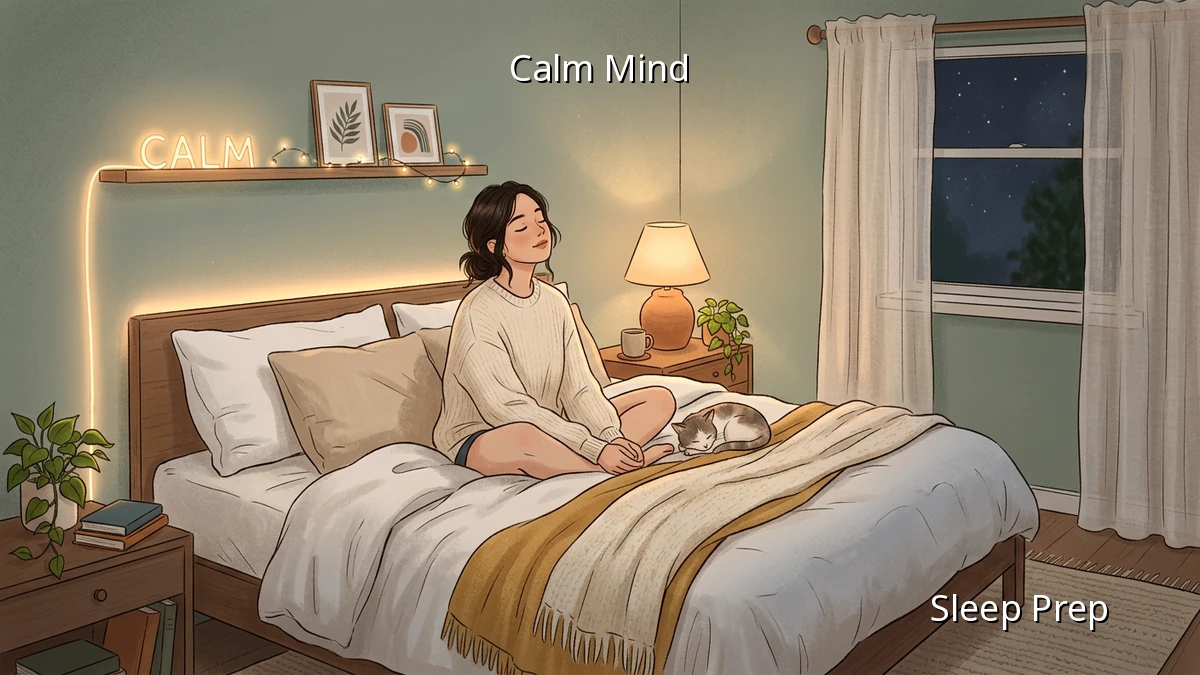
Step 4: Let Go of the Day
As you finish the scan, tell yourself silently: 'The day is done. I have done enough, and I am allowed to rest.' Let your breathing return to its natural pace and allow yourself to drift off.
Making Bedtime Habits Stick Without the Pressure
When life gets busy, adding another item to your evening routine can feel overwhelming. The key to sustainable sleep wellness is keeping things realistic.
If five minutes feels too long, start with two minutes. If you miss a night, do not worry about it. Sleep support is not about achieving perfection; it is about showing yourself a little kindness at the end of a demanding day. By creating a small, consistent habit of mental calm, you are teaching your body how to transition into peaceful sleep naturally.
You Are Doing Just Fine
At the end of the day, there is no right or wrong way to wind down. Some nights your mind will feel quiet, and other nights it will feel like a busy highway. Both experiences are completely normal. Be gentle with yourself, enjoy the comfort of your bed, and remember that even a single conscious breath is a wonderful step toward better sleep quality.