Calming Bedtime Routine for Busy Adults
The laptop is finally closed, the kitchen counters are wiped down, but your mind is still racing at a hundred miles an hour.
We have all been there. You want nothing more than to drift off into a peaceful sleep, yet your brain refuses to switch off. When you are balancing a busy career, family life, and the endless mental to-do list, finding a way to transition from high-stress daytime mode to a restful nighttime state can feel like a challenge.
That is where establishing calming evening habits comes in. It is not about creating an elaborate, two-hour ritual that feels like another chore on your list. Instead, it is about small, realistic bedtime habits that signal to your body clock that it is safe to relax. Let us explore some gentle, practical ways to build a calming routine that fits into a busy lifestyle.
Setting the Stage with a Sleep Signal
Our bodies thrive on predictability. When we create a consistent schedule, we help train our internal clock to know when to wind down. One of the easiest ways to start this transition is by changing the environment around us.
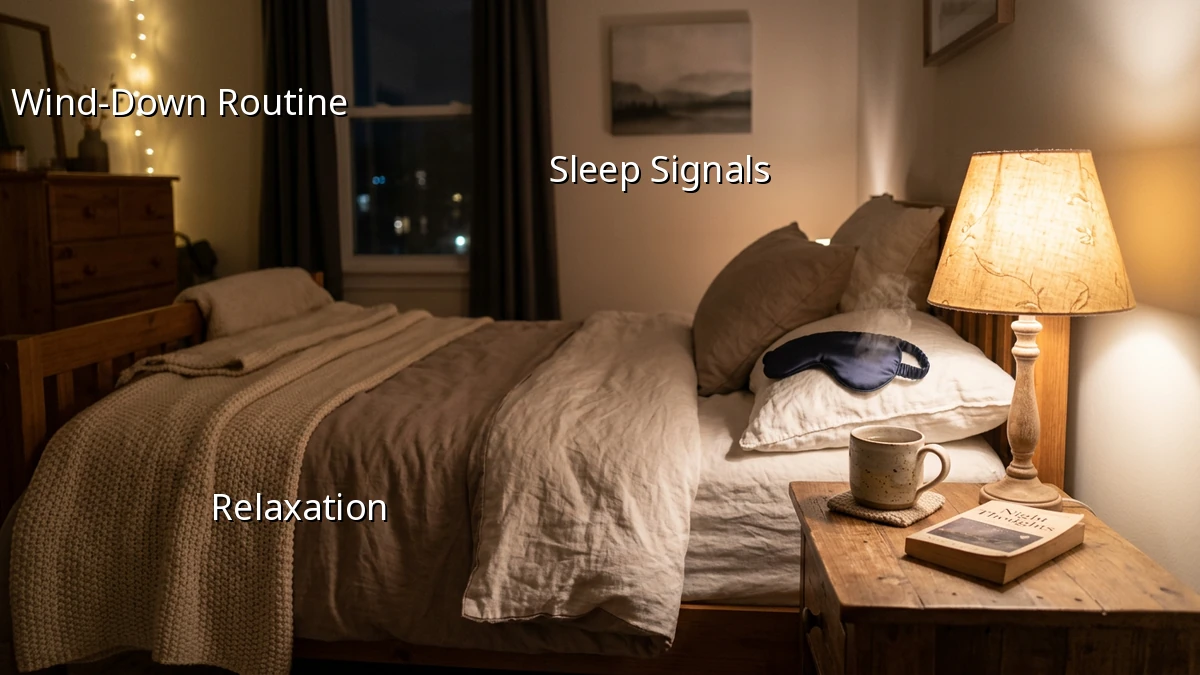
About an hour before you want to sleep, try dimming the lights in your home. Bright overhead lighting keeps our brains alert, mimicking daylight. By switching to soft, warm lamps, you send a clear sleep signal to your brain that the day is drawing to a close.
During this time, making a conscious effort to go screen-free is incredibly helpful. The blue light from phones and tablets can interfere with our natural sleep preparation. If putting the phone away entirely feels too difficult, try placing it on a charger across the room and picking up a physical book instead.
Gentle Physical Transitions
After a long day of sitting at a desk or running errands, our bodies carry a lot of physical tension. Helping your muscles relax is a key part of sleep hygiene.
A warm shower or bath about an hour before bed can work wonders. It is not just about the warmth; it is about the natural drop in body temperature that happens afterward, which naturally induces sleepiness.
Following your shower, spending just five minutes on gentle stretching or deep breathing can help release the physical stress of the day. You do not need a full yoga session—just a few simple movements to help you connect with your breath and find some mental calm.

Creating a Cozy Sanctuary
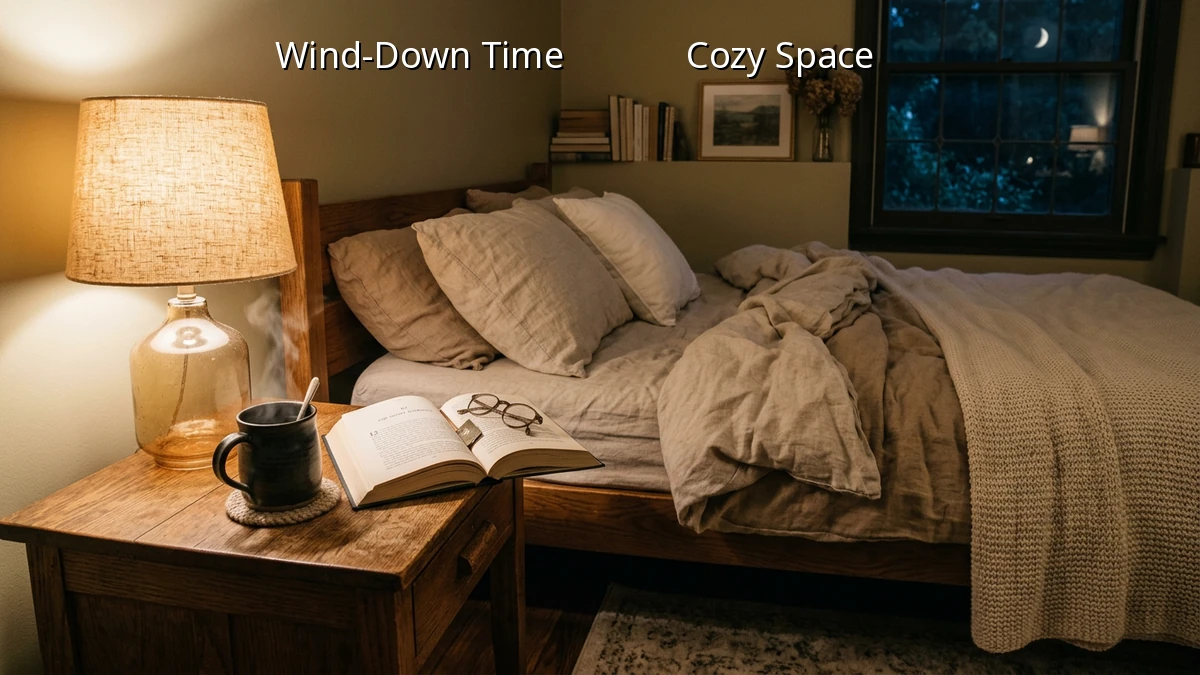
Your bedroom should feel like a haven from the busy world outside. Simple adjustments to your environment can make a significant difference in how easily you drift off.
Keeping a cozy bedroom that is cool, dark, and quiet is essential for healthy sleep. If you find silence too loud, introducing soothing sounds like white noise or gentle nature sounds can help quiet a racing mind.
You might also enjoy sipping a warm cup of caffeine-free herbal tea, like chamomile or lavender, as part of your evening rituals. The warmth of the mug in your hands can be incredibly grounding, serving as a physical anchor for relaxation and stress relief.
Progress Over Perfection
When life gets busy, your evening routine might not look perfect every night. Some evenings, you might only have time for a quick warm shower and a few deep breaths before bed, and that is completely okay.
The goal of these calming evening habits is not to add pressure to your life, but to reduce friction. Be gentle with yourself, focus on consistency rather than perfection, and remember that even the smallest step toward winding down is a win for your wellbeing.