Simple Bedtime Habits for Busy People
The laptop screen finally clicks shut, and the quiet hum of the house takes over, but your mind is still racing at a hundred miles an hour. We have all been there. After a long day of balancing work, family, and endless to-do lists, crawling into bed should feel like a relief. Yet, so often, our brains refuse to switch off. It is easy to feel like you need an elaborate, two-hour spa routine to get decent rest, but who has time for that? Real life is busy, and sleep preparation needs to fit into the cracks of our actual schedules.
Improving your sleep hygiene does not require a lifestyle overhaul. Instead, it is about creating small, sustainable bedtime relaxation techniques that signal to your body clock that it is safe to wind down. Here are a few realistic, simple habits you can start tonight to find that much-needed mental calm.
1. Dim the Lights to Create a Sleep Signal
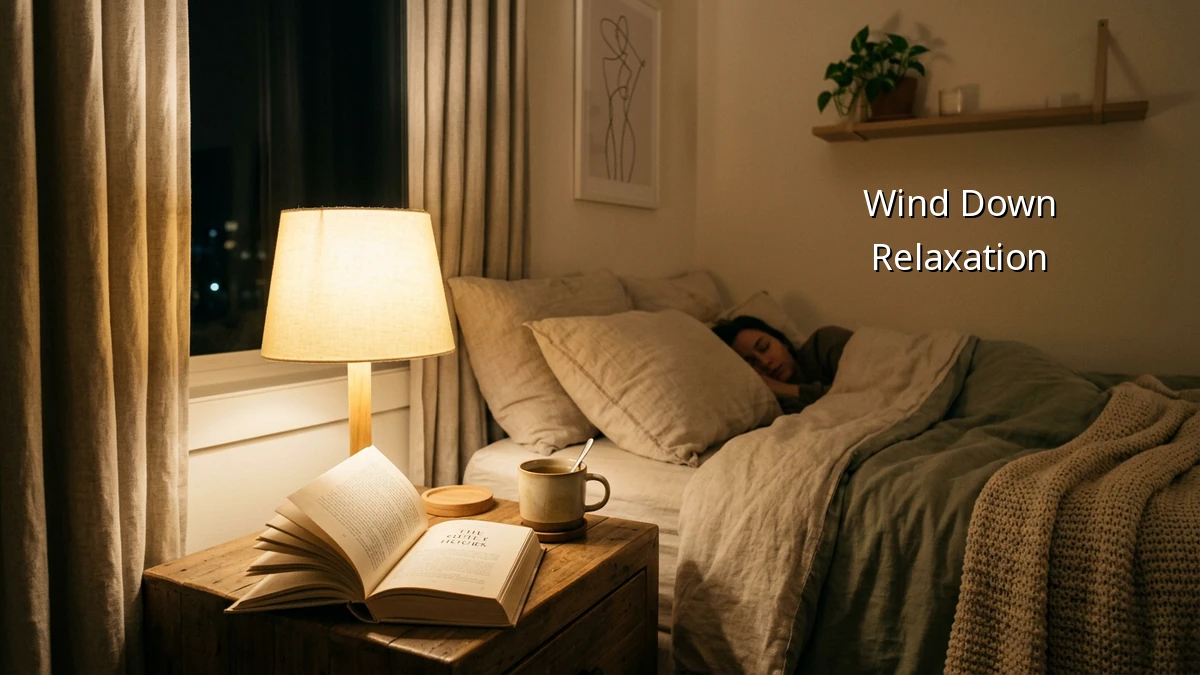
Our bodies are highly sensitive to light. When we keep our living spaces brightly lit right up until we crawl under the covers, we confuse our internal clock. You do not need to sit in total darkness, but simply switching off overhead lights and relying on a few warm lamps an hour before bed can make a world of difference. This simple shift acts as a natural sleep signal, prompting your brain to start producing melatonin, the hormone that helps us drift off.
2. Give Yourself a Screen-Free Buffer
It is incredibly tempting to do one last scroll through social media or check emails in bed. However, the blue light from screens mimics daylight, keeping our brains alert. More than the light itself, the mental stimulation of seeing a work email or a stressful news update keeps our minds active. Try setting a boundary: plug your phone in across the room or on a dresser instead of your nightstand. Even a fifteen-minute screen-free wind-down before closing your eyes can significantly improve your sleep quality.
3. Release Physical Tension with a Warm Shower or Gentle Stretching
We carry the stress of the day in our bodies, often without realizing it. Our shoulders are tight, our jaws are clenched, and our muscles are tense. A warm shower about an hour before bed is a wonderful way to physically wash away the day. As your body cools down after the shower, it naturally mimics the temperature drop that happens right before sleep, making you feel naturally drowsy. If a shower feels like too much effort, try spending just three minutes doing gentle stretching on the rug next to your bed. Focus on your neck, shoulders, and lower back to release that physical buildup of stress.
4. Sip Something Warm and Practice Deep Breathing
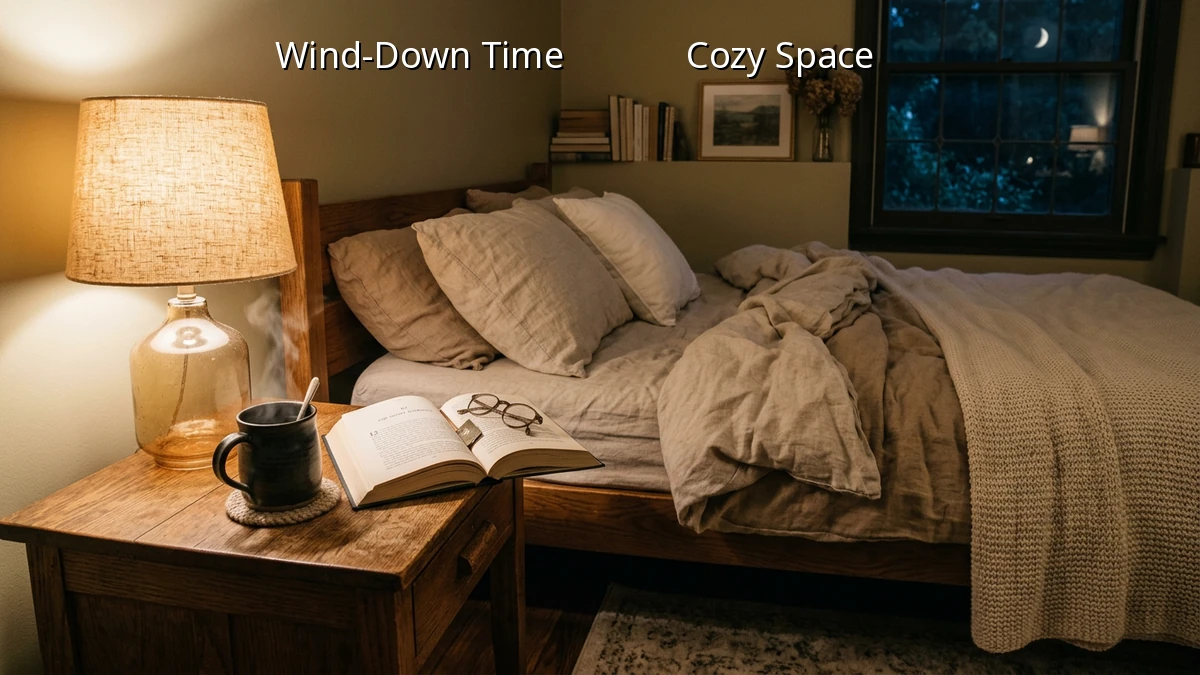
Creating a cozy bedroom environment is as much about what we put into our bodies as what we do with them. A warm cup of caffeine-free herbal tea, like chamomile or lavender, can be a beautiful anchor for your evening. While your tea steeps, take a few slow, deep breaths. Inhale for four seconds, hold for four, and exhale for six. This simple breathing pattern activates your parasympathetic nervous system, which is responsible for relaxation and stress relief. It is a quick, free, and highly effective way to transition from the chaos of the day to a state of calm.
Finding Your Own Rhythm
You do not have to do all of these things tonight. In fact, trying to force a perfect daily routine can sometimes cause more stress than it relieves. Sleep hygiene is personal, and consistency matters far more than perfection. Maybe tonight you just dim the lights a little earlier, or perhaps you try leaving your phone across the room. Be gentle with yourself as you find what works for your life. You deserve a restful night, and even the smallest step toward a calmer evening is a step worth taking.