Simple Sleep Routine for Night Shifters
The morning sun is just starting to peek through the window, and while the rest of the neighborhood is waking up with their first cup of coffee, you are finally heading to bed. It is a strange, quiet feeling, trying to wind down when the world around you is gearing up for the day. If you work the night shift, you know exactly how challenging it can be to get quality rest when your body clock is telling you to stay awake.
Over time, I have learned that managing sleep hygiene when your hours are flipped is not about achieving perfection. It is about finding small, realistic habits that help your body transition from work mode to rest mode. Let us talk about how to build a simple sleep routine that actually fits your life.
The Power of a Consistent Sleep Schedule
When you work non-traditional hours, consistency is your best friend. Trying to maintain a consistent sleep schedule might sound difficult, especially on your days off, but keeping a similar bedtime every day helps anchor your internal clock.
When we constantly shift our sleep times back and forth, our bodies get confused, leading to that heavy, foggy feeling. Even if you adjust your sleep window by just an hour or two on weekends instead of flipping it completely, that small bit of predictability can make a world of difference for your energy levels.

Creating Your Daytime Sanctuary
Sleeping during the day means fighting against light and noise. To give yourself the best chance at deep rest, your bedroom needs to feel like midnight, even at noon.
- Blackout Curtains: Investing in a good set of blackout curtains is a game-changer. Keeping the room pitch-black signals to your brain that it is time to produce melatonin, the sleep hormone.
- White Noise: The sound of lawnmowers, delivery trucks, or daytime traffic can easily disrupt your sleep cycle. A simple white noise machine or a fan can create a soothing background hum that masks those sudden daytime sounds.
- A Cool Temperature: Our bodies naturally cool down when we sleep. Keeping your room slightly cool helps mimic this natural drop in temperature, making it easier to drift off.
A Simple Wind-Down Ritual to Signal Your Brain
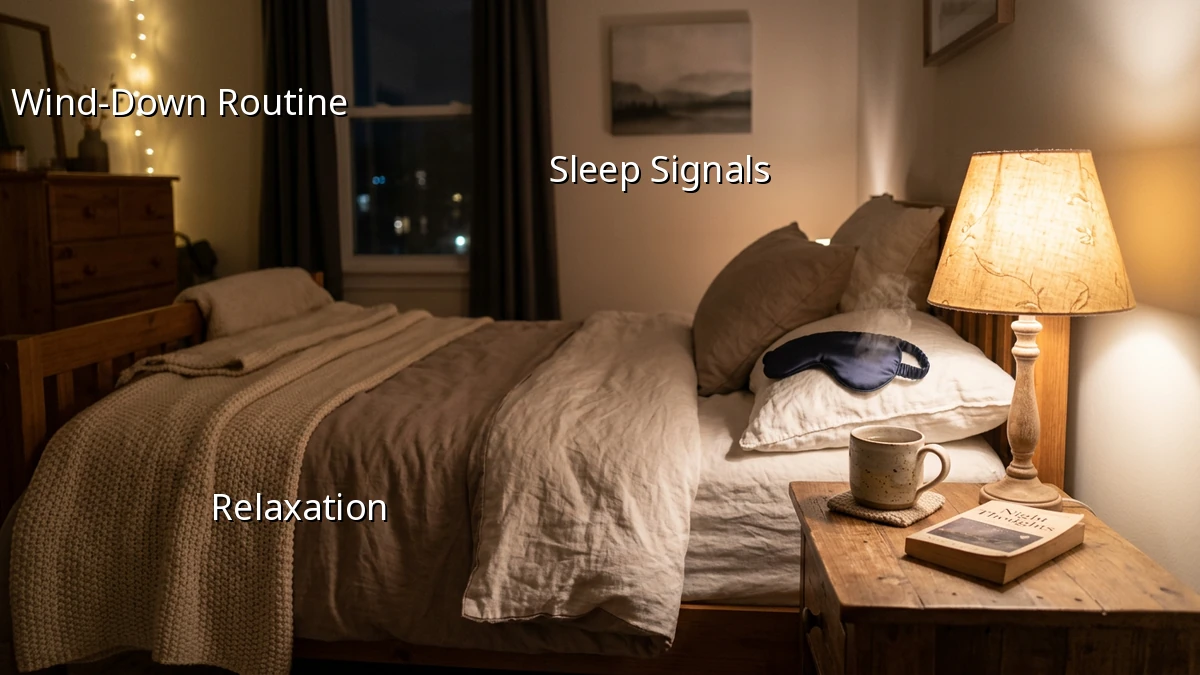
Just like we need a morning routine to wake up, we need a gentle transition to help us slide into sleep. A simple wind-down ritual acts as a sleep signal to your body that the workday is officially over.
Try spending the last thirty to forty-five minutes before bed doing calming activities. This could mean keeping things screen-free to avoid the stimulating blue light from your phone. Instead, you might enjoy reading a chapter of a book, doing some light stretching to release physical tension, or sipping a warm cup of caffeine-free herbal tea.
Even a warm bath or shower before bed can help. As your body cools down after the bath, it naturally mimics the temperature drop that happens right before sleep, helping you feel naturally drowsy.
Be Gentle with Your Progress
Adjusting to shift work sleep is a journey of trial and error. Some days will be easier than others, and that is completely okay. You do not have to change everything overnight. Maybe this week you just focus on putting up darker curtains, or trying to go to bed at the same time for a few days in a row.
Listen to your body, celebrate the small wins, and remember that any step toward better rest is a step in the right direction. You are doing the best you can, and your body appreciates every little bit of care you give it.