Reduce Night Stress Without Medicine
Reduce Night Stress Without Medicine
You finally crawl under the covers after a long, busy day, expecting instant relief, but instead, your mind decides it is the perfect time to replay every conversation and preview tomorrow's to-do list. It is incredibly frustrating when your body is exhausted but your brain refuses to shut down. We have all been there, staring at the ceiling, wishing for a quick switch to turn off the noise.
Finding a natural bedtime calm does not require a complicated, hours-long ritual or medical intervention. When we talk about sleep hygiene, it is really just about creating small, realistic habits that signal to your brain that it is safe to let go of the day. Let's look at a few gentle, non-medical sleep strategies that actually fit into a busy life.
The Power of a 'Brain Dump' for a Quiet Mind
One of the biggest obstacles to a peaceful sleep is mental clutter. When we try to remember everything we need to do tomorrow, our brain stays in active mode.
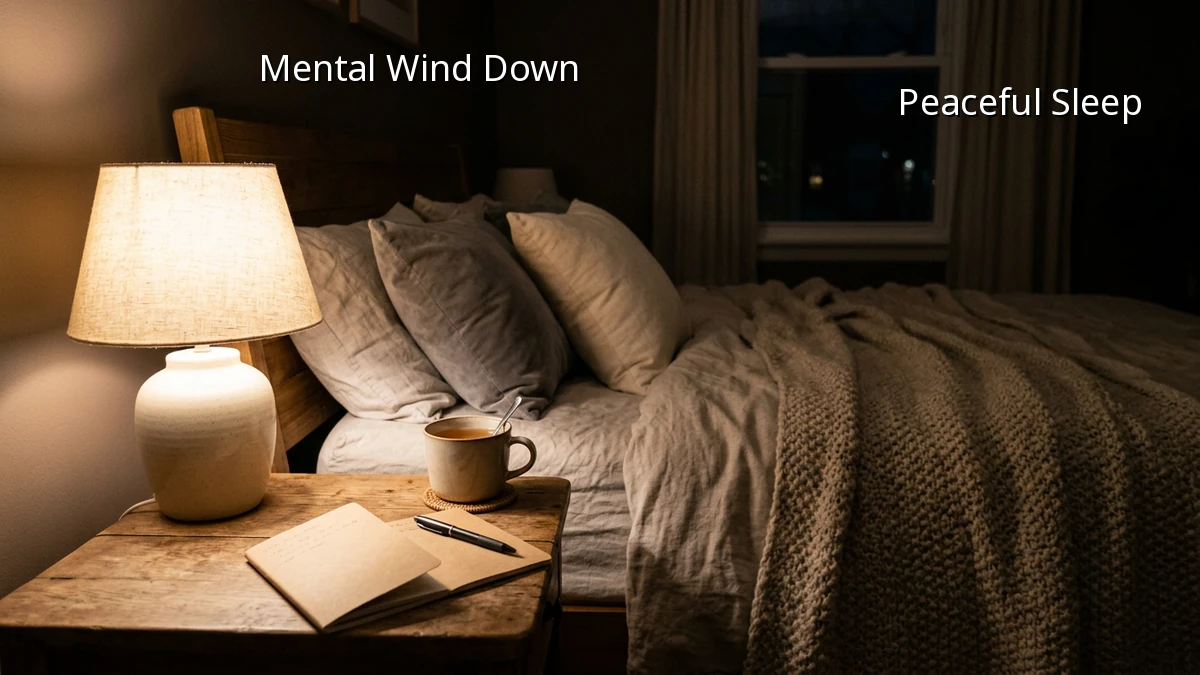
A simple mental wind down habit is the 'brain dump'. Keep a small notebook by your bed. Before you turn off the lights, spend just two minutes writing down whatever is swirling in your head. It does not have to be organized or neat. It could be a worry, a task for tomorrow, or just a random thought. By putting it on paper, you are telling your brain, 'This is safe now, we can deal with it tomorrow.' This simple act of stress relief helps transition you into a state of natural relaxation.
Creating a Low-Friction Evening Routine
We often see elaborate evening relaxation routines online that involve ten different steps, but who has the energy for that after a tiring day? A realistic evening routine should reduce friction, not add to your mental fatigue.
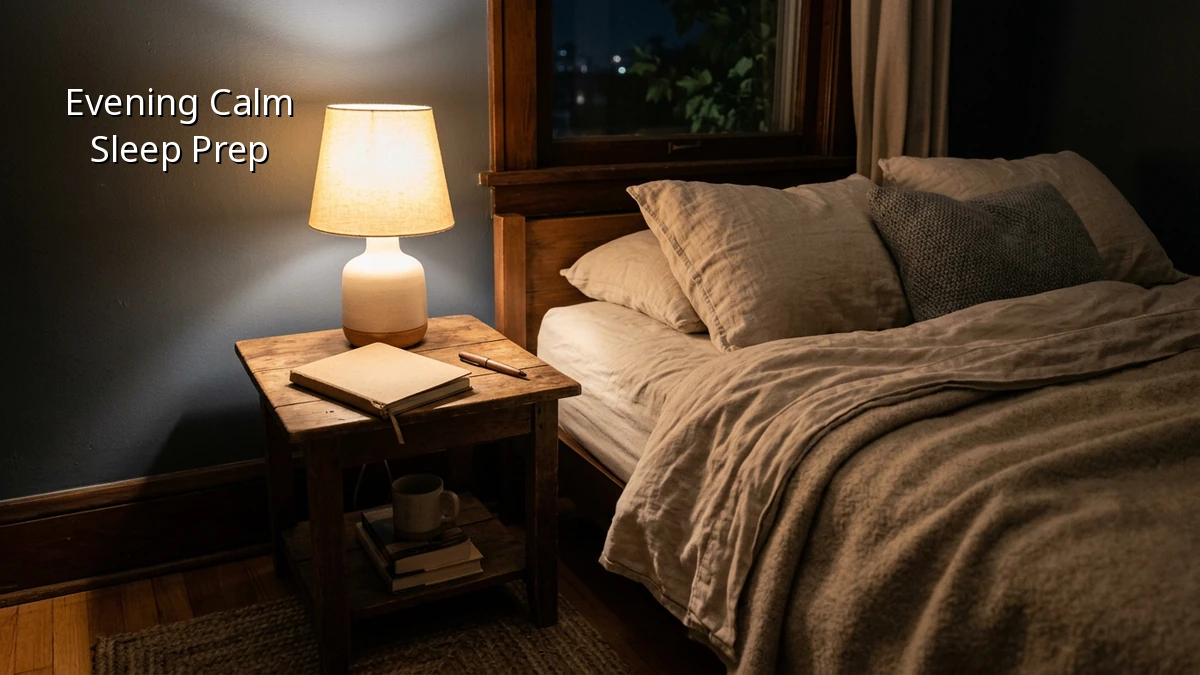
Instead of aiming for perfection, focus on one or two small bedtime habits that support your sleep wellness.
- Dim the lights early: About an hour before bed, turn off the bright overhead lights and use lamps instead. This simple shift supports your body's natural sleep prep by encouraging melatonin production.
- Step away from the scroll: It is hard to completely banish screens, but even putting your phone across the room 30 minutes before closing your eyes can make a massive difference in your sleep quality.
These small adjustments are powerful tools for stress reduction, helping you transition from the high-energy demands of the day to a state of nighttime calm.
Gentle Sensory Shifts for Natural Sleep
Our environment plays a huge role in how easily we can achieve a calm mind. You do not need expensive gadgets to create a soothing space; simple sensory cues can work wonders.
Try focusing on comfort and quiet. A cool room, a comfortable blanket, or even a soft, repetitive sound like a fan or a white noise app can help drown out both external noises and internal chatter. These gentle cues act as sleep support, reminding your body that it is time for restful sleep.
Be Kind to Yourself on Restless Nights
At the end of the day, healthy sleep is not about achieving a perfect record. Some nights will still be challenging, and that is completely okay. If you find yourself lying awake for more than twenty minutes, try not to force it. Get up, do something quiet in dim light, and try again when you feel sleepy.
You are doing the best you can, and taking even one small step toward a natural bedtime calm is a wonderful way to care for yourself. Sleep well, and remember to be gentle with your progress.